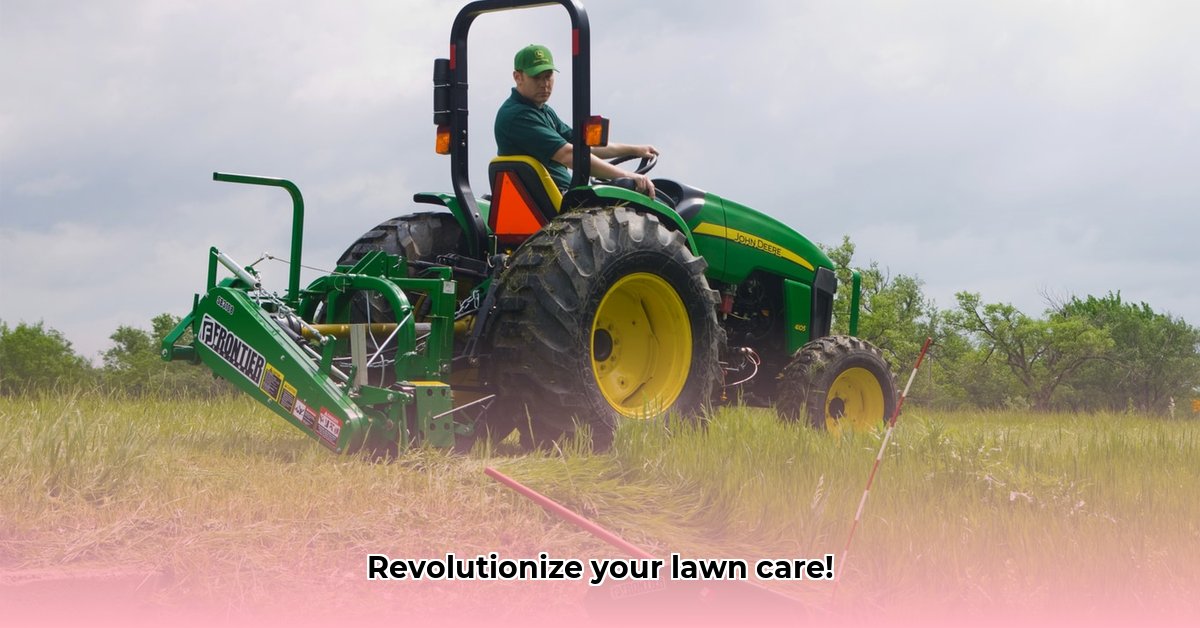
Ready to revolutionize your mowing operation and boost efficiency? Lawn tractor sickle mowers offer a sustainable and effective solution for maintaining your land. But choosing between single-action and dual-action models can be tricky. This guide provides a comprehensive comparison, helping you select the perfect mower for your needs, budget, and terrain. For more resources on used lawn tractors, check out this helpful website.
Single-Action vs. Dual-Action Sickle Mowers: A Detailed Comparison
The core distinction between single-action and dual-action sickle mowers lies in their cutting mechanisms. Single-action mowers employ a single reciprocating blade, while dual-action models use two blades working simultaneously. This seemingly minor difference significantly impacts performance, maintenance, and overall cost.
Cutting Width & Capacity: Speed vs. Efficiency
Dual-action mowers typically boast a wider cutting swath (the width of the cut) and significantly higher cutting capacity per hour. However, this increased speed comes at a cost – higher fuel consumption and potentially more strain on your tractor's engine. Single-action mowers, while slower, offer greater fuel efficiency, making them ideal for smaller properties or those prioritizing fuel conservation. Which cutting capacity best fits your needs?
Power Requirements & Fuel Efficiency: The Sustainability Factor
Dual-action mowers demand more horsepower from your tractor, resulting in higher fuel consumption. Single-action mowers, requiring less power, offer considerably better fuel efficiency. This makes them a more sustainable choice, reducing your environmental footprint and operating costs. Experts agree fuel efficiency contributes to lower overall operating costs. How does fuel efficiency impact your bottom line and environmental responsibility?
Maintenance & Durability: Long-Term Costs
Single-action mowers generally require less frequent maintenance, primarily blade sharpening. Their simpler design translates to fewer parts and a potentially longer lifespan. Dual-action mowers, with their more intricate mechanisms, demand more frequent servicing, potentially involving more complex repairs and higher associated costs. Regular maintenance is crucial for both; however, single-action mowers offer significant long-term cost advantages. What is your budget for maintenance over the life of the mower?
Terrain Adaptability: Navigating Challenging Landscapes
Both mower types can handle various terrains, but their performance varies. Single-action mowers, with their simpler design, prove more adaptable to uneven ground and rocky areas. Their resilience to impacts makes them suitable for challenging landscapes. Dual-action mowers, while efficient on flat terrain, might be more susceptible to damage in rugged conditions. What is the nature of your land - flat, hilly or rocky?
Cost: Initial Investment vs. Long-Term Expenses
Dual-action mowers typically command a higher initial purchase price. However, the long-term cost, considering maintenance and repairs, needs careful consideration. Single-action mowers, despite a lower initial investment, offer significant long-term savings due to reduced maintenance needs. How does upfront cost compare to long-term maintenance costs?
Choosing Your Sickle Mower: A Practical, Step-by-Step Guide
- Assess Your Farm: Evaluate the size of your property and the type of vegetation you'll be mowing. Larger properties often benefit from the speed of dual-action mowers.
- Analyze Your Terrain: Determine the nature of your land – flat, hilly, or rocky. Single-action mowers are generally more robust in uneven terrain.
- Define Your Budget: Consider both the initial purchase price and long-term maintenance costs. Single-action mowers usually offer significant cost savings over time.
- Cutting Capacity & Efficiency: Determine the required cutting width and capacity based on your land size and mowing frequency.
- Research Models: Explore various single and dual-action mowers from reputable manufacturers, comparing specifications and user reviews.
- Prioritize Safety: Always prioritize safety during operation and maintenance. Invest in protective gear and familiarize yourself with safety protocols.
Operating & Maintaining Your Sickle Mower: Essential Tips
- Regular Inspections: Inspect your mower before each use, carefully checking blades, belts, and other components for damage or wear.
- Blade Sharpening: Regularly sharpen blades to maintain cutting efficiency and reduce strain on the engine. Single-action mowers might require more frequent sharpening.
- Lubrication: Lubricate moving parts as per manufacturer's instructions to prevent wear and tear.
- Safety Precautions: Always wear appropriate safety gear, including eye protection, hearing protection, and sturdy footwear.
Conclusion: Optimizing Efficiency and Sustainability
Selecting the right lawn tractor sickle mower depends on your individual needs and priorities. While dual-action mowers offer speed and high cutting capacity, single-action mowers provide superior fuel efficiency and lower maintenance costs. By carefully considering the factors outlined in this guide, you can make an informed decision that optimizes your mowing operations while promoting sustainable land management practices.